
Choosing the right fire alarm system and fire detection equipment starts with understanding the installation rather than choosing a manufacturer first.
Building layout, system category, detector requirements, existing cabling, device identification, future expansion and installation constraints can all influence the most appropriate fire alarm architecture.
For professional installers, G-TEC supplies fire detection equipment covering conventional, addressable, two-wire and wireless addressable systems, with solutions from manufacturers including Apollo, Zeta, Fike and Ajax.
This guide looks at the main types of fire alarm systems, how different detection technologies fit into a system, and some of the options available to installers when specifying equipment for a project.
explore our full range of trade-priced fire alarm systems
Understanding the Main Types of Fire Alarm Systems
The distinction between conventional, addressable, two-wire and wireless systems is important because each architecture approaches device communication and installation differently.
Conventional Fire Alarm Systems
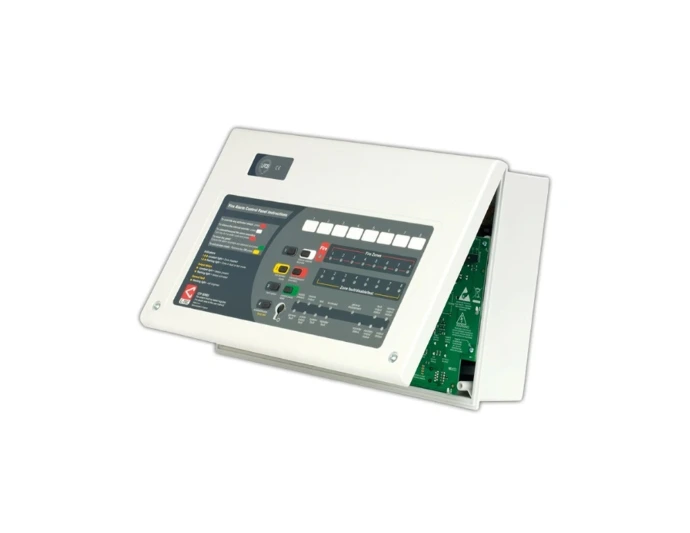
A conventional fire alarm system divides a building into detection zones.
When a detector or manual call point operates, the control panel identifies the affected zone rather than an individual device.
This architecture can be appropriate for less complex installations where zone-level identification meets the requirements of the system design.
A conventional fire alarm installation may include:
• Conventional fire alarm control panels
• Smoke detectors
• Heat detectors
• Manual call points
• Separate alarm warning circuits
• Sounders and visual alarm devices
The number of zones and the way the building is divided should be determined by the fire alarm design rather than simply by the physical size of the premises.
Addressable Fire Alarm Systems
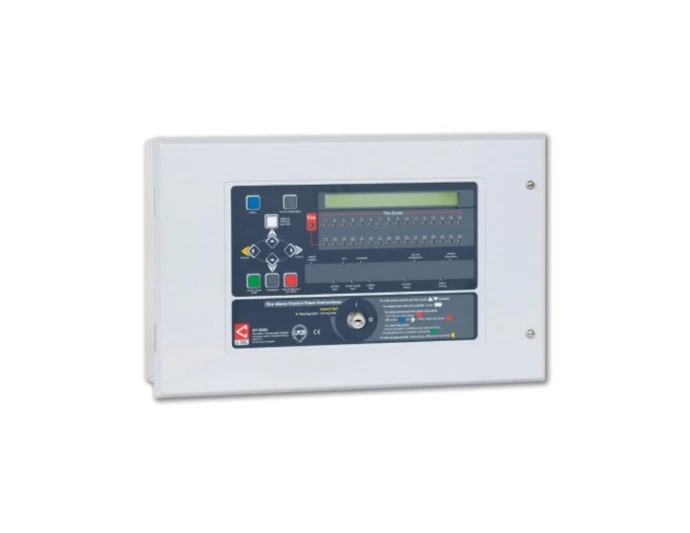
An addressable fire alarm system assigns an individual address to field devices, allowing the control and indicating equipment to identify which device has generated an alarm, fault or other event.
This becomes particularly useful as installations increase in complexity.
Addressable systems can also offer more extensive cause-and-effect programming, system monitoring and networking capabilities, depending on the panel and protocol being used. Rather than relying only on the affected zone, an installer or responsible person can obtain more precise information about the source of an event.
Two-Wire Fire Alarm Systems
Two-wire fire alarm systems are designed to allow detection and alarm devices to share the same pair of conductors, reducing the need for separate detector and sounder circuits. This can reduce field cabling and simplify installation on suitable projects.
However, installers should not assume that every two-wire system operates in exactly the same way.
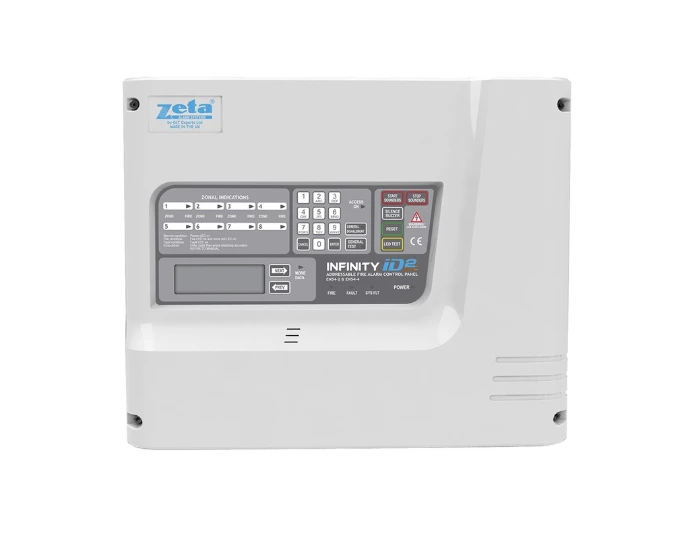
For example, Fike describes TWINFLEXpro² as an intelligent two-wire system using a conventional-style cabling architecture and classifies it as analogue non-addressable. Zeta's Infinity ID2, meanwhile, is an intelligent two-wire system capable of identifying devices while retaining the cabling advantages associated with two-wire installation.
The capabilities of the specific system therefore matter just as much as the term “two-wire”.
Wireless Addressable Fire Alarm Systems
Wireless fire detection provides another architecture for installers to consider.
The Ajax EN54 Line is a wireless commercial fire detection and alarm system built around wireless addressable devices communicating with the EN54 Fire Hub control and indicating equipment using Ajax's Jeweller radio protocol.

Rather than connecting each detector, sounder or visual alarm device using traditional field cabling, compatible Ajax EN54 devices communicate wirelessly with the CIE.
This can be particularly relevant where reducing field cabling, containment work or disruption to the premises is an important part of the installation. Wireless does not remove the need for proper system design. Device positioning, radio communication, system configuration and testing remain important, and Ajax requires signalstrength testing when determining suitable device locations.
What Equipment Makes Up a Fire Detection and Alarm System?
A complete fire detection and alarm system may contain a range of devices, including:
- Fire alarm control and indicating equipment
- Smoke detectors
- Heat detectors
- Multi-sensor detectors
- Manual call points
- Sounders
- Sounder beacons
- Visual alarm devices
- Detector bases
- Input and output modules
- Interfaces
- Repeaters
- Power supplies
The equipment selected needs to form a compatible system and meet the requirements of the design.
For non-domestic premises in the UK, BS 5839-1:2025 is the current code of practice covering the design, installation, commissioning and maintenance of fire detection and fire alarm systems. It superseded BS 5839-1:2017 in April 2025.
Product selection should therefore be considered alongside the fire risk assessment, system design, applicable legislation and relevant standards.
Choosing Fire Detection Equipment
Selecting the panel architecture is only one part of the installation. The correct fire detector also needs to be selected for each area.
Smoke Detectors
Smoke detectors are designed to respond to products of combustion and are widely used where smoke detection forms part of the specified fire alarm design.
Optical smoke detectors are commonly used to detect visible smoke associated with many developing fires. However, detector selection must consider the environment. Dust, steam, aerosols and other normal conditions can influence whether a particular smoke detector is appropriate.
Heat Detectors
A heat detector responds to temperature rather than relying primarily on smoke detection.
Depending on the product, detection may be based on a fixed-temperature threshold, rate of temperature rise or a combination of methods.
Heat detection may be specified where environmental conditions make smoke detection unsuitable, but it should not be treated as an automatic alternative simply because a location contains dust, fumes or steam. The correct detector type remains dependent on the fire alarm design, risk and applicable standards.
Multi-Sensor and Multi-Mode Detection
Some fire detection equipment combines multiple sensing methods or allows different detection modes to be configured. This can give system designers additional flexibility when selecting detection for a particular environment.
Fike's TWINFLEX Multipoint ASD, for example, combines smoke and heat detection with selectable operating modes, while versions can also incorporate an integral sounder or sounder and strobe.
The important point for an installer is not simply the number of modes offered, but whether the selected configuration is appropriate for the system design.
Apollo Fire Detection: Series 65, XP95 and AlarmSense
For installers specifying Apollo fire detection equipment through G-TEC, the relevant ranges are Series 65, XP95 and AlarmSense. Each addresses a different type of fire alarm architecture.
Apollo Series 65
Apollo Series 65 is a conventional fire detection range.
It is intended for systems where detectors operate as part of conventional detection zones rather than being individually addressed by the control panel.
For installers specifying a conventional fire alarm system, Series 65 provides an established Apollo detection option without introducing the additional architecture required by an addressable system.
Apollo XP95
Apollo XP95 is an analogue addressable fire detection range.
XP95 devices communicate with compatible addressable control panels using the Apollo protocol, allowing individual devices to be identified by the system. The range includes addressable smoke and heat detection alongside other compatible devices used to build a complete system.
G-TEC currently supplies XP95 detectors together with compatible addressable control equipment supporting the Apollo XP95 protocol.
For installers, XP95 is therefore the relevant Apollo option where the project requires an addressable rather than conventional architecture.
Apollo AlarmSense
Apollo AlarmSense is Apollo's two-wire solution.
Compatible detection and alarm devices can share zone wiring on a purpose-designed AlarmSense system, helping reduce the amount of cabling required compared with architectures using separate detection and alarm circuits.
G-TEC's current AlarmSense offering includes optical smoke and heat detection, sounder bases, open-area sounders, sounder beacons and relay equipment, together with compatible AlarmSense control panels.
For installers comparing Apollo ranges, the distinction can therefore be kept straightforward:
• Series 65: conventional
• XP95: addressable
• AlarmSense: two-wire
This is more useful than selecting an Apollo detector by product name alone because the required system architecture determines which range is appropriate.
Zeta Fire Alarm Systems
Zeta fire alarm systems give installers options across conventional, intelligent two-wire and addressable architectures.
G-TEC's current Zeta range includes equipment from each of these categories. For conventional installations, Zeta's Infinity8 panels provide zonal fire alarm control in several configurations.
The Infinity ID2 provides an intelligent two-wire alternative. One of its notable characteristics is the ability to identify devices while retaining a two-wire architecture, making it different from a basic conventional zonal system. It can also be used with radial circuits and, depending on configuration, as a loop.
For addressable installations, Zeta SmartConnect provides individual device addressing, causeand-effect programming and built-in networking capability. Zeta's single-loop SmartConnect panel can also provide remote monitoring through its network connectivity.
This gives installers a useful progression within the Zeta portfolio depending on how much device identification and system control the project requires.
Fike TWINFLEX Fire Alarm Systems
For installers considering Fike fire alarm equipment, TWINFLEXpro² is one of the key systems within G-TEC's current range. Fike describes TWINFLEXpro² as a conventional two-wire fire alarm system.
Detectors and sounders can operate using the same pair of wires per zone, reducing the amount of field cabling required compared with a system using separate detector and sounder wiring. The system is available with 2, 4 and 8-zone control panels, and Fike's Multipoint ASD detection provides selectable smoke and heat detection options. Versions with integral sounders and sounder/strobes are also available.
From an installer's perspective, the main reason to consider TWINFLEXpro² is its architecture: it provides additional functionality over a basic conventional installation while retaining a zonal, two-wire approach.
It should therefore be evaluated against the project's required level of identification, cabling arrangement and future expansion rather than simply compared with an addressable system on price.
Ajax EN54 Wireless Fire Detection
The Ajax EN54 Line brings a different approach to the fire systems in G-TEC's range.
Ajax describes it as a wireless commercial fire detection and alarm system. The range includes the EN54 Fire Hub, wireless addressable smoke and heat detectors, sounders, visual alarm devices, manual call points, input/output equipment and the EN54 Fire ReX radio range extender. G-TEC currently stocks the EN54 Line as a dedicated fire and life-safety category.
The EN54 Fire Hub acts as the system CIE, while individual EN54 fire devices communicate wirelessly using the Jeweller protocol. Devices can be assigned to fire zones while retaining individual device information within the system.
This differs from a traditional conventional or two-wire installation because communication between the CIE and compatible field devices is wireless rather than relying on radial or loop field cabling.
For installers, potential advantages include reducing cable routes and containment requirements and making installation practical in premises where running new field cabling would otherwise create significant disruption.
However, wireless fire systems introduce their own design considerations. Radio coverage and signal stability need to be confirmed, compatible EN54 equipment must be used, and the installation must still comply with the requirements applicable to the project.
Ajax's EN54 documentation includes requirements around radio communication monitoring, device testing and EN 54 compliance, so these need to form part of commissioning rather than treating wireless installation as simply mounting devices and pairing them to a hub.
For G-TEC installers, Ajax EN54 therefore sits naturally alongside conventional, two-wire and wired addressable solutions as another architecture to consider when the requirements of the site make wireless fire detection appropriate.
How Should Installers Choose Between the Systems?
There is no single architecture or manufacturer that is right for every commercial fire alarm system.
A useful starting point is to consider the practical requirements of the installation.
Level of Identification
Does the project require only zone-level identification, or is identifying an individual activated device important?
A conventional system may provide the required level of information for one project, while an addressable system may be more appropriate for another.
Intelligent two-wire systems such as Zeta Infinity ID2 also demonstrate that the distinction is not always simply conventional versus addressable.
Existing and New Cabling
The cabling arrangement can have a major effect on the installation. Traditional conventional and addressable systems, two-wire architectures and wireless systems each have different infrastructure requirements.
For a new installation, that may influence labour and containment planning. For an existing site, the usable cabling already in place can affect which upgrade paths are practical.
Size and Complexity
The physical size of the building matters, but complexity is equally important. Cause-and-effect requirements, device identification, multiple alarm areas, interfaces with other systems and future changes can all affect the most appropriate architecture.
Detector Requirements
Detector selection should reflect the fire risk and environmental conditions in each protected area. Smoke, heat and multi-sensor detection should not be selected purely on convenience or because a particular detector is normally associated with a type of room.
Expansion and Maintenance
Installers should consider what happens after commissioning. Available capacity, future extensions, replacement devices, system diagnostics, testing and accessibility for maintenance can all influence the long-term suitability of a system.
Compatibility
Perhaps most importantly, fire alarm equipment should be treated as a system rather than a collection of individual products.
Detectors, panels, sounders, interfaces and other devices need to be compatible with the relevant system and protocol. Manufacturer documentation and current certification should always be checked before equipment is specified or substituted.
Current UK Fire Alarm Standards
For non-domestic fire detection and alarm systems, installers should be working with the current applicable guidance.
As of 2026, the current edition is BS 5839-1:2025 – Fire detection and fire alarm systems for buildings: Design, installation, commissioning and maintenance of systems in non-domestic premises – Code of practice.
BS 5839-1 is a code of practice rather than a product catalogue, and equipment carrying EN 54 certification does not by itself determine whether a complete installation meets the requirements of BS 5839-1.
System design, installation, commissioning and maintenance still need to be considered as a whole. Installers should therefore check the current standard, project specification, manufacturer's documentation and any other applicable regulatory requirements when designing or modifying a system.
Choosing Fire Alarm Equipment from G-TEC
G-TEC supplies professional fire alarm systems and fire detection equipment for a range of system architectures. The current offering includes:
• Apollo Series 65 conventional fire detection
• Apollo XP95 addressable fire detection
• Apollo AlarmSense two-wire equipment
• Zeta conventional, intelligent two-wire and addressable systems
• Fike TWINFLEXpro² two-wire fire alarm equipment
• Ajax EN54 wireless addressable fire detection
Rather than choosing a manufacturer first, installers can begin with the requirements of the project and then select a compatible system and devices that meet the required architecture.
Whether the project requires conventional detection, individual addressability, reduced cabling through a two-wire design or an EN54 wireless solution, G-TEC can help installers identify suitable panels, detectors, notification devices and compatible system components.
Explore G-TEC's fire detection ranges or contact the team for assistance selecting equipment for your next installation.